

QML1396 (Horizon B)
Basic information
Sample name: QML1396 (Horizon B)
Reference: G. J. Price and I. H. Sobbe. 2005. Pleistocene palaeoecology and environmental change on the Darling Downs, Southeastern Queensland, Australia. Memoirs of the Queensland Museum 51(1):171-201 [ER 3684]
Geography
Country: Australia
State: Queensland
Coordinate: 28° 56' S, 152° 51' E
Latlng basis: estimated from map
Time interval: Late Pleistocene
Section: 3684
Unit number: 1
Unit order: below to above
Max Ma: 0.0948
Min Ma: 0.0753
Age basis: U/Th
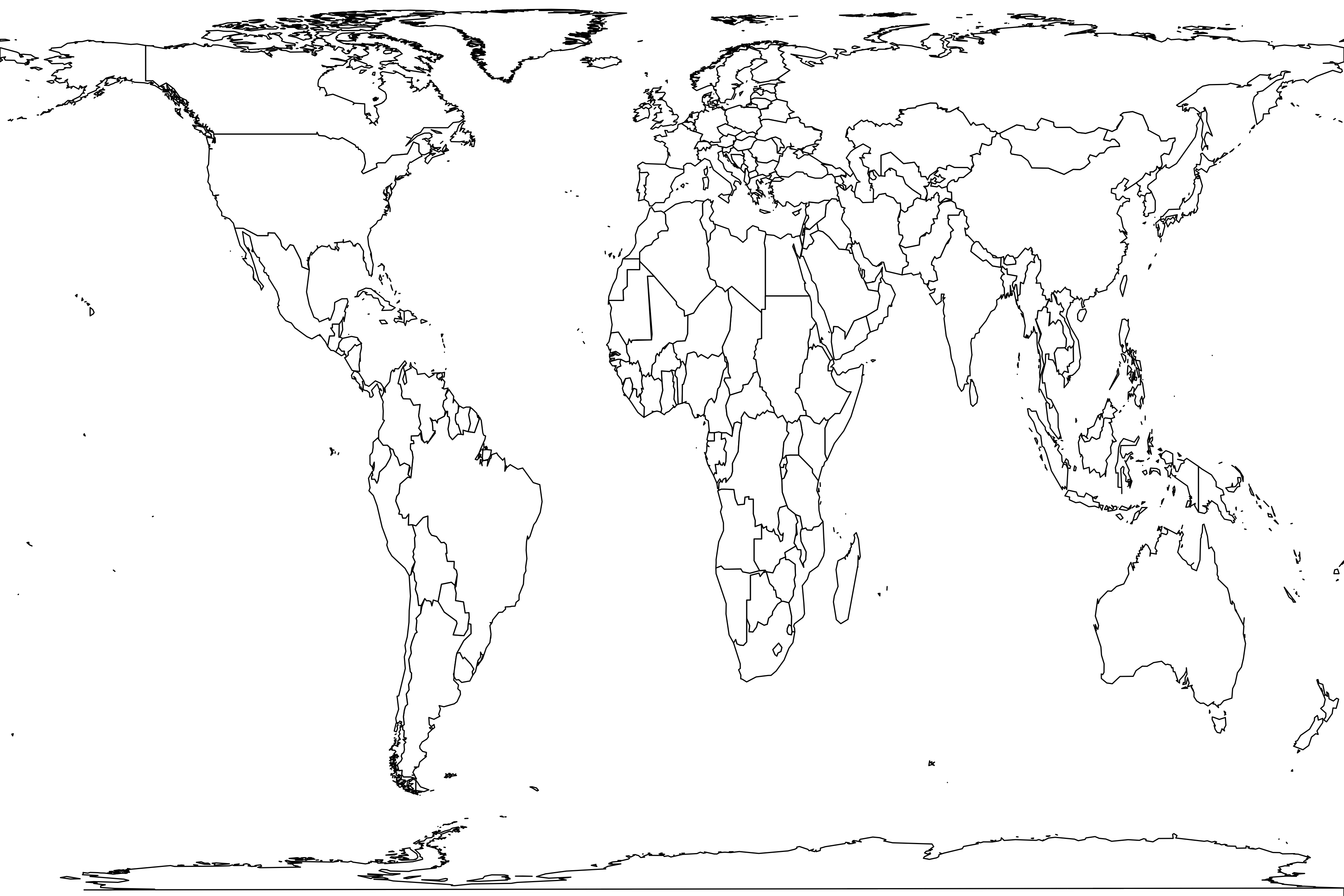
Geography comments: Site QML1396 is located in the Darling Downs, southeastern Queensland, which encompasses low rolling hills and plains west of the Great Dividing Range.
"QML1396 is exposed laterally over 70 metres in the southern bank of Kings Creek, in the southern Darling Downs".
U/Th series dates for Horizon B range from 94800 ± 3700 to 75300 ± 2700 BP (Price et al. 2011).
"QML1396 is exposed laterally over 70 metres in the southern bank of Kings Creek, in the southern Darling Downs".
U/Th series dates for Horizon B range from 94800 ± 3700 to 75300 ± 2700 BP (Price et al. 2011).
Environment
Lithology: siliciclastic (mixed)
Taphonomic context: fluvial deposit
Habitat comments: "Fluvial sediments of the region consist of clays, silts and sands that are generally derived from the erosion of Mesozoic sandstones and Miocene basalts of the Great Dividing Range".
"The modern Kings Creek catchment is fed by several mainly dry or intermittent watercourses, resulting in a relatively small geographic sampling area".
"As the Pleistocene catchment area was likely not markedly larger than present, it is unlikely that material from QML1396 was subjected to long distance fluvial transport".
"The entire deposit is characterised by a fining-upwards sequence ... with vertebrate fossil material generally restricted to Horizons B and D. The majority of the lower portion of Horizon B is below the modern water table".
"The modern Kings Creek catchment is fed by several mainly dry or intermittent watercourses, resulting in a relatively small geographic sampling area".
"As the Pleistocene catchment area was likely not markedly larger than present, it is unlikely that material from QML1396 was subjected to long distance fluvial transport".
"The entire deposit is characterised by a fining-upwards sequence ... with vertebrate fossil material generally restricted to Horizons B and D. The majority of the lower portion of Horizon B is below the modern water table".
Methods
Life forms: other large mammals, clams, snails
Sampling methods: screenwash
Sample size: 136 specimens
Net or trap nights: 0
kg screened: 200
Basal area status: not applicable
Sampling comments: "A section was measured representing the entire depositional sequence exposed in the creek bank".
"Fossils were recovered by in situ collecting and sieving of sediment specifically to target smaller specimens".
"Sediments were washed using graded sieves of 10 mm to 1 mm".
"Approximately 200 kg of sediment was processed from Horizon B".
Due to its position below the water table, "collecting of Horizon B was generally possible only during drought conditions", with most material collected in November and December 2002.
"Fossils were recovered by in situ collecting and sieving of sediment specifically to target smaller specimens".
"Sediments were washed using graded sieves of 10 mm to 1 mm".
"Approximately 200 kg of sediment was processed from Horizon B".
Due to its position below the water table, "collecting of Horizon B was generally possible only during drought conditions", with most material collected in November and December 2002.
Metadata
Sample no: 3849
Contributor no: Benjamin Carter
Enterer: Benjamin Carter
Created: 2022-01-18 16:27:55
Modified: 2023-09-11 10:47:29
Abundance distribution
Each square represents a species. Square sizes are proportional to counts. Values are logged.
Statistics
12 species
6 singletons
total count 136
geometric series index: 29.5
Fisher's α: 3.174
geometric series k: 0.7007
Hurlbert's PIE: 0.7035
Shannon's H: 1.502
Good's u: 0.956
Register
| Sarcophilus sp. | 1 | |
| †Thylacinus cynocephalus (thylacine) | 1 | |
| Diprotodon sp. | 1 | |
| †Thylacoleo carnifex | 1 | |
| †Troposodon minor | 2 | |
| Notamacropus agilis siva (agile wallaby) | 1 | |
| "Macropus agilis siva" | ||
| †Macropus titan (kangaroo) | 5 | |
| †Protemnodon anak (giant kangaroo) | 3 | |
| †Protemnodon brehus (giant kangaroo) | 1 | |
| Velesunio ambiguus | 20 | |
| at least 20 specimens | ||
| Corbicula australis | 50 | |
| "Corbicula (Cobiculina) australis" - at least 50 specimens | ||
| Plotiopsis balonnensis | 50 | |
| "Thiara (Plotiopsis) balonnensis" - at least 50 specimens | ||