

Wadh Lang'o (Elmenteitan)
Basic information
Sample name: Wadh Lang'o (Elmenteitan)
Reference: P. Lane, C. Ashley, O. Seitsonen, P. Harvey, S. Mire, and F. Odede. 2007. The transition to farming in eastern Africa: New faunal and dating evidence from Wadh Lang'o and Usenge, Kenya. Antiquity 81:62-81 [ER 3703]
Geography
Country: Kenya
State: Nyanza
Coordinate: 0° 25' S, 35° 44' E
Latlng basis: stated in text as range
Time interval: Holocene
Section: 3703.1
Unit number: 2
Unit order: below to above
Max Ma: 0.001819
Min Ma: 0.001746
Age basis: radiocarbon (uncalibrated)
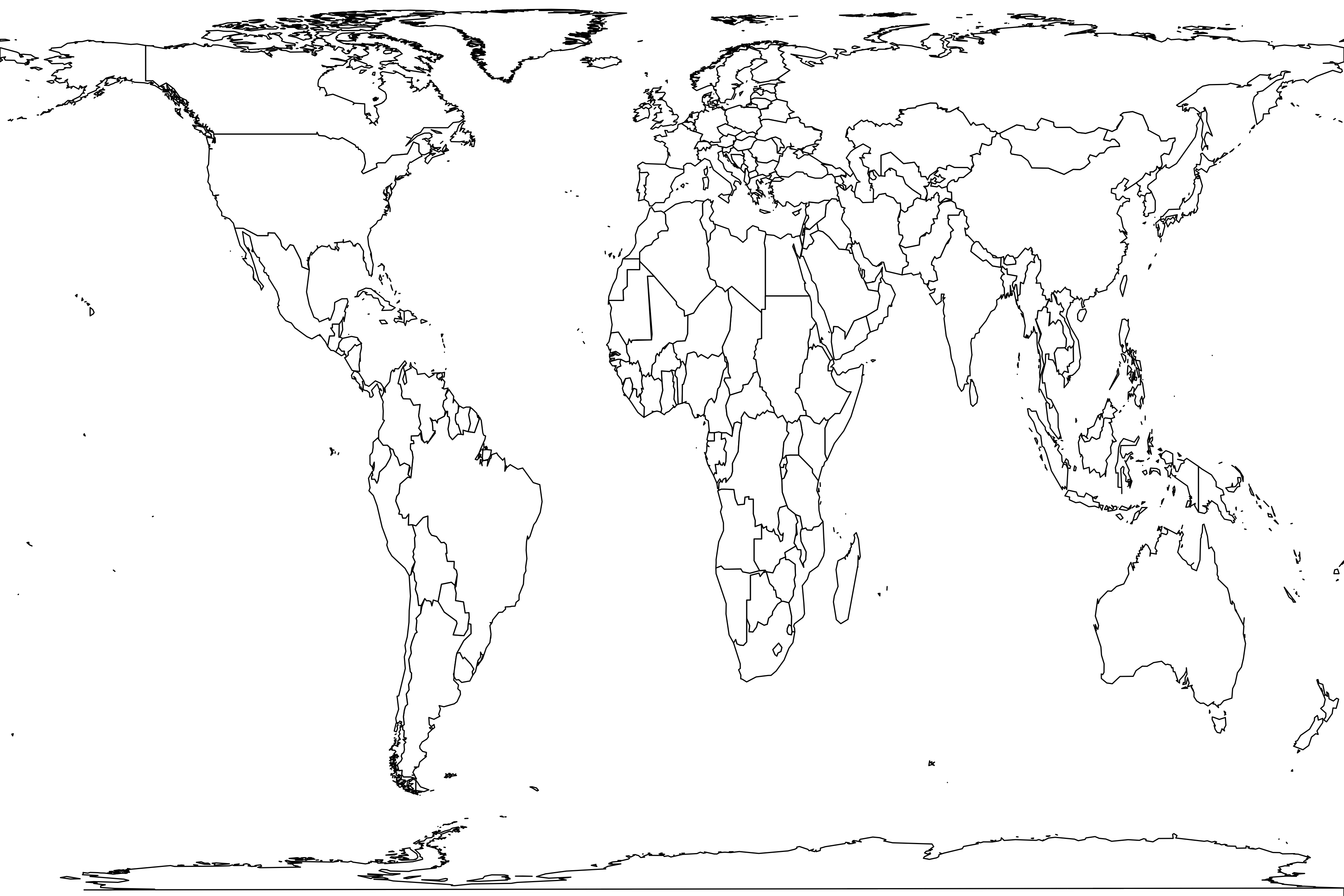
Geography comments: "The site of Wadh Lang’o lies at c. 1200 m asl, alongside rapids of the Sondu-Miriu River, which empties into the Winam Gulf of Lake Victoria, in South Nyanza, Kenya".
Radiocarbon dates for the "Elmenteitan" deposits range from 1890 ± 28 BP to 1746 ± 28 BP.
Radiocarbon dates for the "Elmenteitan" deposits range from 1890 ± 28 BP to 1746 ± 28 BP.
Environment
Lithology: not described
Taphonomic context: human accumulation, settlement
Archaeology: ceramics, hearths, stone tools
Habitat comments: "The Wadh Lang’o site contains a well-stratified sequence of deposits extending back at least to the pre-ceramic Late Stone Age, with successive layers of Kansyore, Elmenteitan, Urewe, post-Urewe Middle Iron Age (MIA) wares, and historic Luo material, in each case associated with well preserved faunal assemblages".
The middle layers consist of three major ashy deposits containing a series of isolated lenses of burning (suggestive of temporary hearths) and are principally associated with Elmenteitan ceramics of the Pastoral Neolithic tradition".
In addition to ceramics, various stone tools including cores, microliths, scrapers and blades were also present. Predominantly shallow slice marks were observed on some bone fragments, along with evidence of burning.
The middle layers consist of three major ashy deposits containing a series of isolated lenses of burning (suggestive of temporary hearths) and are principally associated with Elmenteitan ceramics of the Pastoral Neolithic tradition".
In addition to ceramics, various stone tools including cores, microliths, scrapers and blades were also present. Predominantly shallow slice marks were observed on some bone fragments, along with evidence of burning.
Methods
Life forms: carnivores, primates, ungulates, birds, fishes
Sampling methods: quarry, screenwash
Sample size: 3009 specimens
Years: 2000-2004
Net or trap nights: 0
Basal area status: not applicable
Sampling comments: "During initial investigation, eight test-pits, mostly 1 × 1m, were excavated at various localities across the site".
In June and July 2001, a 5 × 5m trench was excavated a few metres upslope from Trench 5, and in 2004, a further two 2 × 2m test pits to the south-west and south-east of the main 2001 excavation were dug.
"All deposits were dry sieved through 5mm mesh sieves".
In June and July 2001, a 5 × 5m trench was excavated a few metres upslope from Trench 5, and in 2004, a further two 2 × 2m test pits to the south-west and south-east of the main 2001 excavation were dug.
"All deposits were dry sieved through 5mm mesh sieves".
Metadata
Sample no: 3909
Contributor no: Benjamin Carter
Enterer: Benjamin Carter
Created: 2022-03-03 13:51:15
Modified: 2023-05-01 00:27:11
Abundance distribution
Each square represents a species. Square sizes are proportional to counts. Values are logged.
Statistics
21 species
4 singletons
total count 3009
geometric series index: 29.7
Fisher's α: 3.045
geometric series k: 0.6967
Hurlbert's PIE: 0.6951
Shannon's H: 1.4989
Good's u: 0.9987
Register
| Papio sp. | 19 | |
| Redunca redunca (Bohor reedbuck) | 11 | 44.0 kg |
| Syncerus caffer (African buffalo) | 7 | 548.0 kg |
| Canis sp. | 1 | |
| Bos sp. | 14 | |
| Cephalophinae indet. | 9 | |
| Bubo sp. | 1 | |
| Alcelaphus buselaphus (hartebeest) | 2 | |
| Crocuta crocuta (spotted hyena) | 1 | 66.0 kg |
| Aepyceros melampus (impala) | 58 | 51.0 kg |
| Oreotragus oreotragus (klipspringer) | 1 | |
| Ourebia ourebi (oribi) | 4 | 14.0 kg |
| Caprinae indet. | 494 | |
| "Ovicaprine" | ||
| Raphicerus campestris (steenbok) | 2 | 9.7 kg |
| Eudorcas thomsonii (Thomson's gazelle) | 35 | |
| "Gazella thomsoni" | ||
| Cyprinidae indet. | 1377 | |
| Bagridae indet. | 15 | |
| Cichlidae indet. | 765 | |
| Clariidae indet. | 169 | |
| Citharinidae indet. | 4 | |
| Protopterus aethiopicus | 20 | |