

Die Kelders Cave 1 (Layer 10)
Basic information
Sample name: Die Kelders Cave 1 (Layer 10)
Reference: R. G. Klein and K. Cruz-Uribe. 2000. Middle and later stone age large mammal and tortoise remains from Die Kelders Cave 1, Western Cape Province, South Africa. Journal of Human Evolution 38(1):169-195 [ER 3715]
Geography
Country: South Africa
State: Western Cape
Coordinate: -34° 32' S, 19° 22' E
Latlng basis: stated in text
Time interval: Late Pleistocene
Section: 3715
Unit number: 1
Unit order: above to below
Max Ma: 0.0703
Min Ma: 0.0594
Age basis: OSL
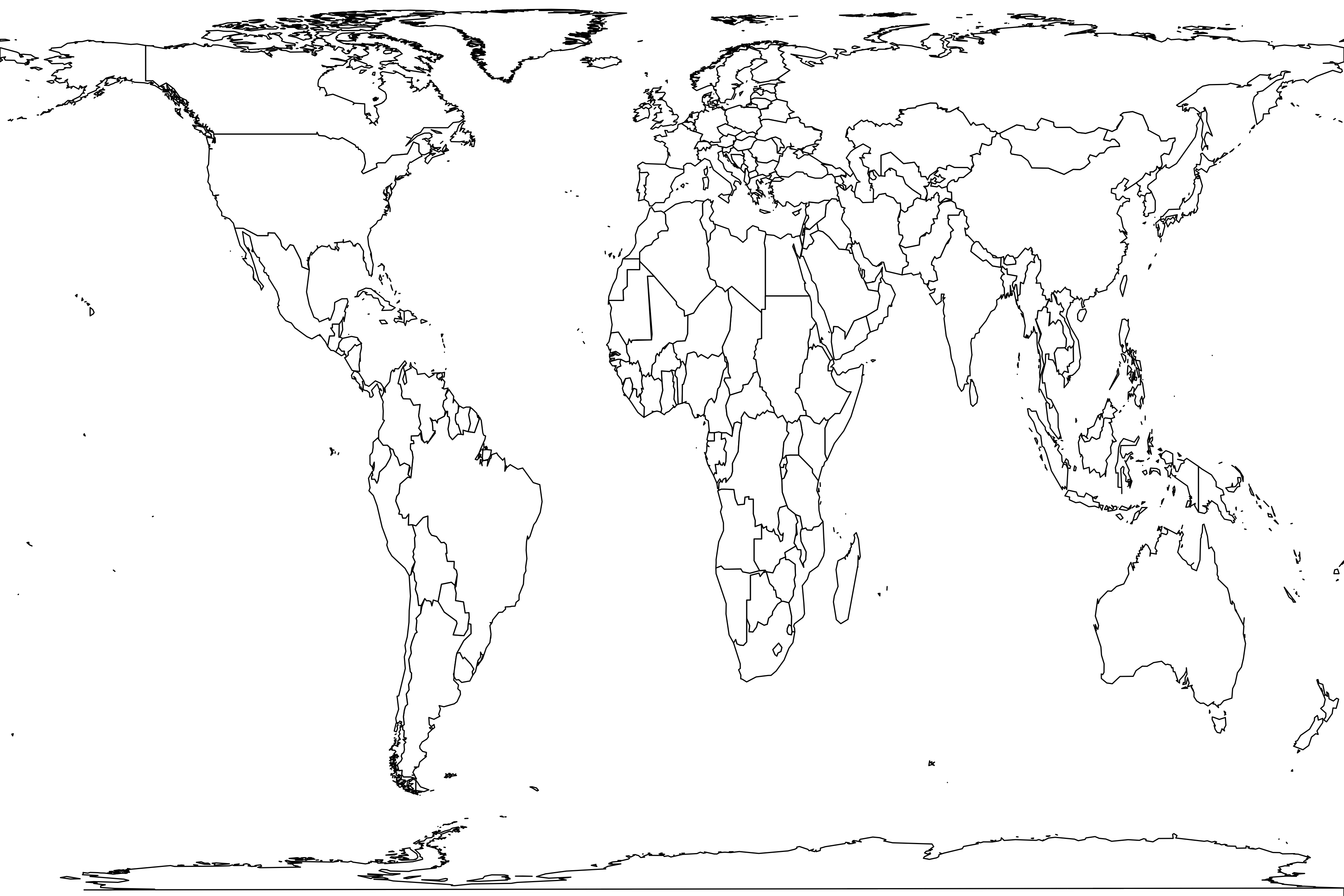
Geography comments: "The site of Die Kelders (DK) consists of a pair of contiguous caves situated at sea level on the southwestern coast of South Africa".
A series of OSL dates from Layers 9-11 of the DK1 deposit range from 70.3 ± 5·8 ka to 59.4 ± 5.0 ka (Feathers & Bush 2000).
A series of OSL dates from Layers 9-11 of the DK1 deposit range from 70.3 ± 5·8 ka to 59.4 ± 5.0 ka (Feathers & Bush 2000).
Environment
Lithology: sandstone
Taphonomic context: bird accumulation, cave, human accumulation
Archaeology: stone tools
Habitat comments: "Die Kelders Cave 1 was formed by wave action and fresh-water seepage, and consists of 17 stratigraphic layers".
"Layer 10 is a reddish-brown sandy sediment with varying frequencies of artefacts and fauna. It is composed of discontinuous lenses of darker brown sand within thicker banded/laminated sands. There are ashy hearth-like features, though no strictly demarcated hearths nor hearth stones. The lithics from Layer 10 are dominated by un-retouched flakes and blades made on quartzite".
The site is a combination of bird and human accumulations. Eagle owls were most likely responsible for the accumulation of small mammals (molerats, hares, hyraxes) while humans were "the predominant accumulator of large mammals" (ungulates and seals), as indicated by "the frequency of hammer-stone percussion marks and carnivore toothmarks".
"Layer 10 is a reddish-brown sandy sediment with varying frequencies of artefacts and fauna. It is composed of discontinuous lenses of darker brown sand within thicker banded/laminated sands. There are ashy hearth-like features, though no strictly demarcated hearths nor hearth stones. The lithics from Layer 10 are dominated by un-retouched flakes and blades made on quartzite".
The site is a combination of bird and human accumulations. Eagle owls were most likely responsible for the accumulation of small mammals (molerats, hares, hyraxes) while humans were "the predominant accumulator of large mammals" (ungulates and seals), as indicated by "the frequency of hammer-stone percussion marks and carnivore toothmarks".
Methods
Life forms: carnivores, rodents, ungulates, marine mammals, other large mammals, other small mammals
Excluded forms: birds, turtles, other reptiles, clams
Sampling methods: quarry, screenwash
Sample size: 1714 specimens
Years: 1969 - 1995
Net or trap nights: 0
Basal area status: not applicable
Sampling comments: "Die Kelders Cave 1 was excavated on two occasions: first between 1969 and 1973, and again from 1992 to 1995".
"The original excavations were conducted within 1 m squares that were excavated in natural stratigraphic units. All sediments were wet-screened through 1/8th inch (3 mm) mesh, with bone sorted into identifiable and non-identifiable sets. The more recent excavations were conducted within 50 cm2 quadrants within 1 m squares and all sediments were wet-screened through a nested 12 mm, 3 mm, and 1·5 mm mesh sieve".
The register below corresponds to the remains uncovered from Layer 10 in both excavations combined, including additional identifiable material found in the non-identifiable bags from the original excavations. This additional material was presented by Marean et al. (2000) in their analysis of the large mammal fauna from this layer.
"The original excavations were conducted within 1 m squares that were excavated in natural stratigraphic units. All sediments were wet-screened through 1/8th inch (3 mm) mesh, with bone sorted into identifiable and non-identifiable sets. The more recent excavations were conducted within 50 cm2 quadrants within 1 m squares and all sediments were wet-screened through a nested 12 mm, 3 mm, and 1·5 mm mesh sieve".
The register below corresponds to the remains uncovered from Layer 10 in both excavations combined, including additional identifiable material found in the non-identifiable bags from the original excavations. This additional material was presented by Marean et al. (2000) in their analysis of the large mammal fauna from this layer.
Metadata
Sample no: 3937
Contributor no: Benjamin Carter
Enterer: Benjamin Carter
Created: 2022-03-30 16:26:57
Modified: 2023-05-30 00:42:46
Abundance distribution
Each square represents a species. Square sizes are proportional to counts. Values are logged.
Statistics
14 species
5 singletons
total count 1714
geometric series index: 25.6
Fisher's α: 2.086
geometric series k: 0.5793
Hurlbert's PIE: 0.4624
Shannon's H: 0.9522
Good's u: 0.9971
Register
| Atelerix frontalis (South African hedgehog) | 1 | |
| "Erinaceus frontalis" | ||
| Lepus spp. | 80 | |
| Bathyergus suillus | 1208 | |
| Canis mesomelas (black-backed jackal) | 1 | 7.9 kg |
| Parahyaena brunnea (brown hyena) | 1 | |
| "Hyaena brunnea" | ||
| Arctocephalus pusillus | 332 | |
| Procavia capensis (rock hyrax) | 43 | 2.8 kg |
| Taurotragus oryx (common eland) | 17 | |
| †Hippotragus leucophaeus (bluebuck) | 2 | |
| Redunca arundinum (southern reedbuck) | 1 | |
| Connochaetes gnou (black wildebeest) | 5 | |
| also 12 Alcelaphinae indet. "Alcelaphus/Connochaetes" | ||
| †Antidorcas australis (bovid) | 20 | |
| Raphicerus melanotis (Cape grysbok) | 2 | 9.1 kg |
| also 79 Raphicerus spp. and 1992 Bovidae indet. | ||
| Delphinidae indet. | 1 | |