

Shum Laka rock shelter (Middle/Upper Horizon; gray ash)
Basic information
Sample name: Shum Laka rock shelter (Middle/Upper Horizon; gray ash)
Reference: P. Lavachery. 2001. The Holocene archaeological sequence of Shum Laka rock shelter (Grassfields, western Cameroon). African Archaeological Review 18(4):213-247 [ER 3768]
Geography
Country: Cameroon
State: Northwest
Coordinate: 6° 52' 31" N, 10° 5' 40" E
Latlng basis: stated in text
Time interval: Holocene
Section: 3768
Unit number: 4
Unit order: below to above
Max Ma: 0.00215
Min Ma: 0.000885
Age basis: radiocarbon (uncalibrated)
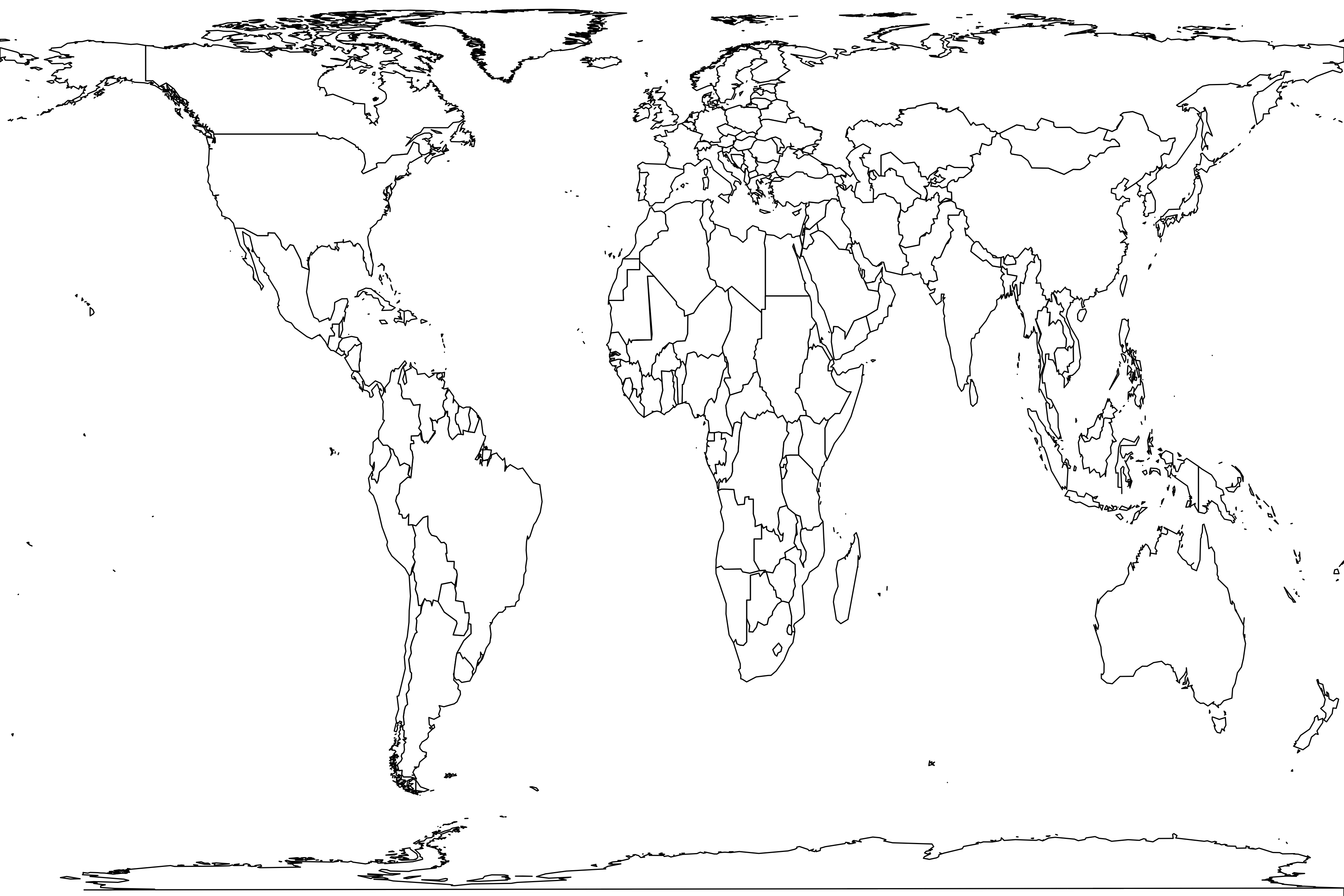
Geography comments: "Shum Laka rock shelter is situated in the Northwest Province of Cameroon, some 17 km southwest of Bamenda, on the territory of Bafochu-Mbu village. It lies in a small gallery forest bordered by savanna, some 1600 m asl".
"Radiocarbon dates for the Middle/Upper Horizon of the gray ash layer range from 2150 B.P. to 885 B.P. (400 cal. BC to cal. 900 AD)".
"Radiocarbon dates for the Middle/Upper Horizon of the gray ash layer range from 2150 B.P. to 885 B.P. (400 cal. BC to cal. 900 AD)".
Environment
Lithology: ash
Taphonomic context: human accumulation, rock shelter
Archaeology: ceramics, stone tools, other artifacts
Habitat comments: "Shum Laka rock shelter covers a surface area of 1200 m2 and contains three main stratigraphic units. The Holocene deposits consist mainly of anthropogenic ashes known as the “A” layer: a lens-shaped mantle that dips from the back to the opening of the cave. It is divided into two members: the ochre ash layer and the gray ash layer".
"The Middle/Upper Horizon of the gray ash layer contains a rich lithic assemblage of 14, 490 artifacts. The industry is remarkably similar to that of the Lower Horizon (sample 4037); the only new tool type that appears is a completely ground adze. The proportion of formal tools in basalt, however, is lower than in the Lower Horizon; the same is true for cores. The number of hammerstones, direct evidence of on-site flaking, is also much reduced. Basalt blades remain frequent but are less well prepared since multifaceted butts and specialized flaking patterns decrease. Two hundred and seventy-four pottery sherds were discovered in this horizon, along with two metal objects: an iron ring and a fragment of an iron bracelet".
"The Middle/Upper Horizon of the gray ash layer contains a rich lithic assemblage of 14, 490 artifacts. The industry is remarkably similar to that of the Lower Horizon (sample 4037); the only new tool type that appears is a completely ground adze. The proportion of formal tools in basalt, however, is lower than in the Lower Horizon; the same is true for cores. The number of hammerstones, direct evidence of on-site flaking, is also much reduced. Basalt blades remain frequent but are less well prepared since multifaceted butts and specialized flaking patterns decrease. Two hundred and seventy-four pottery sherds were discovered in this horizon, along with two metal objects: an iron ring and a fragment of an iron bracelet".
Methods
Life forms: bats, carnivores, primates, rodents, ungulates, other large mammals, birds, snakes, snails
Sampling methods: quarry
Sample size: 493 specimens
Net or trap nights: 0
Basal area status: not applicable
Sampling comments: "A total of 82 m2 of the rock shelter was excavated, opened in two main areas: Sector 1 (in the centre and back of the shelter) and Sector 2 (closer to the entrance). Because of a lack of any finer exploitable stratigraphical features in the very loose ash layers, the excavation proceeded by artificial horizontal spits. In total, the excavations recovered half a million stone artifacts, over 1200 pottery sherds, 18 human skeletons, and thousands of faunal and plant remains".
Metadata
Sample no: 4038
Contributor no: Benjamin Carter
Enterer: Benjamin Carter
Created: 2022-10-28 15:02:21
Modified: 2023-05-30 03:09:31
Abundance distribution
Each square represents a species. Square sizes are proportional to counts. Values are logged.
Statistics
18 species
4 singletons
total count 493
geometric series index: 29.6
Fisher's α: 3.667
geometric series k: 0.7189
Hurlbert's PIE: 0.6358
Shannon's H: 1.4899
Good's u: 0.9919
Register
| Civettictis civetta | 1 | |
| "Viverra civetta" | ||
| Hylochoerus meinertzhageni (giant forest hog) | 109 | |
| Cephalophus sp. | 18 | |
| Tragelaphus scriptus (harnessed bushbuck) | 6 | 31.0 kg |
| Syncerus caffer nanus (African buffalo) | 8 | 548.0 kg |
| Dendrohyrax arboreus | 3 | 2.0 kg |
| Thryonomys swinderianus | 33 | 5.2 kg |
| Funisciurus sp. | 1 | |
| Cricetomys sp. | 2 | |
| "Crycetomis"; also 7 Rodentia indet. | ||
| Papio sp. | 16 | |
| also 50 Cercopithecidae indet. | ||
| Pan troglodytes | 3 | 36.0 kg |
| Pteropodidae indet. | 2 | |
| "Megachiroptera" | ||
| Serpentes indet. | 11 | |
| "Ophidia indet." | ||
| Francolinus sp. | 3 | |
| Achatina sp. | 273 | |
| Thapsia sp. | 1 | |
| Pseudoglossula sp. | 2 | |
| Streptostele sp. | 1 | |
| also 1 Gastropoda indet. | ||