

Marmes Rockshelter (Harrison horizon)
Basic information
Sample name: Marmes Rockshelter (Harrison horizon)
Reference: R. L. Lyman. 2014. Terminal Pleistocene change in mammal communities in southeastern Washington State, USA. Quaternary Research 81(2):295-304 [ER 3771]
Geography
Country: United States
State: Washington
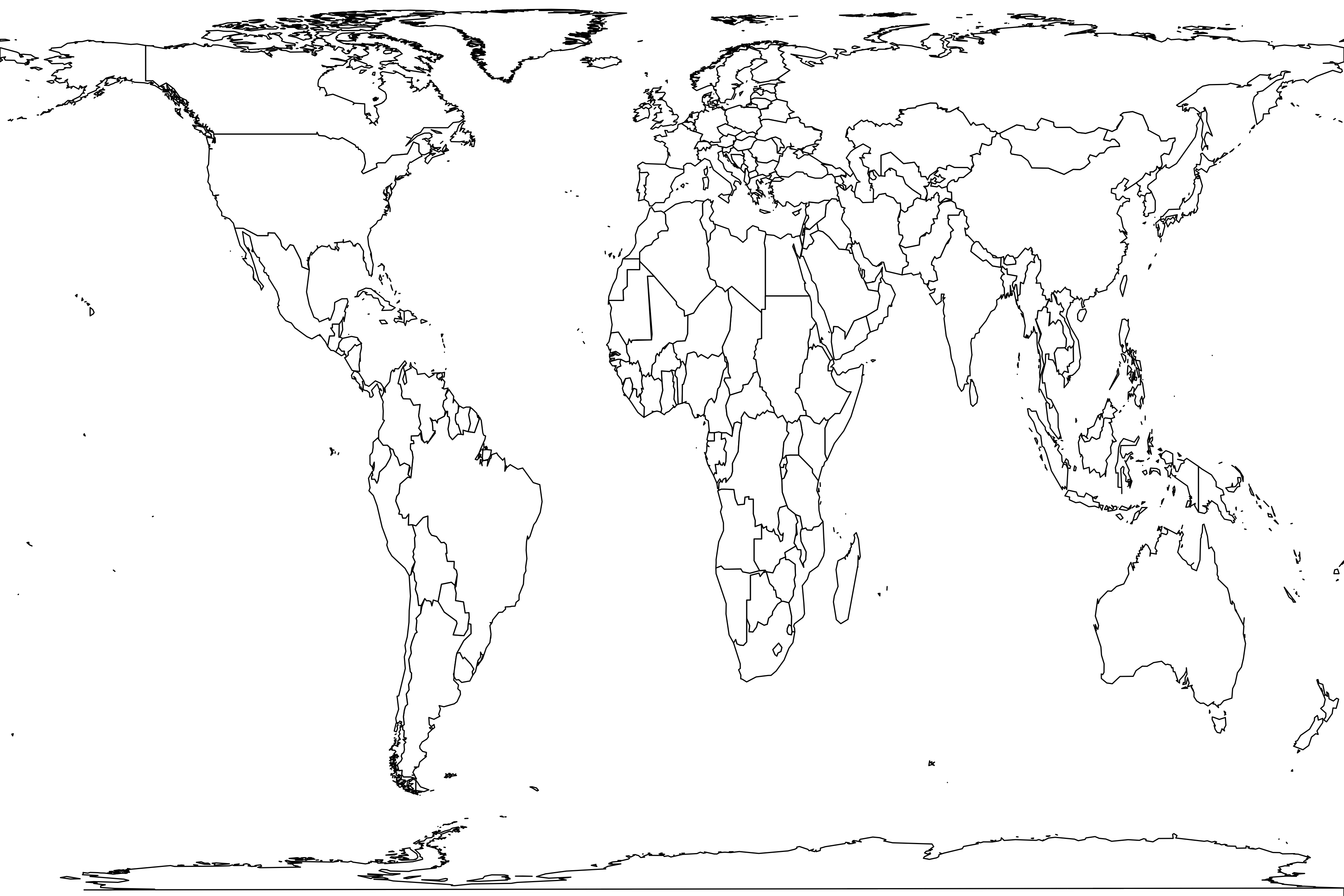
Coordinate: 47° 37' 51" N, 118° 12' 8" W
Latlng basis: stated in text
Time interval: Pleistocene - Holocene
Section: 3771
Unit number: 2
Unit order: below to above
Max Ma: 0.01013
Min Ma: 0.00987
Age basis: radiocarbon (uncalibrated)
Geography comments: "Marmes Rockshelter is situated at the confluence of the Snake and Palouse Rivers, in Franklin County, southeastern Washington, USA".
"Two radiocarbon dates on materials from the Harrison horizon indicate that it was deposited between 9800 and 10, 130 BP (around 12, 600 to 10, 500 cal. BP)".
"Two radiocarbon dates on materials from the Harrison horizon indicate that it was deposited between 9800 and 10, 130 BP (around 12, 600 to 10, 500 cal. BP)".
Environment
Lithology: not described
Taphonomic context: overbank deposit
Archaeology: stone tools
Habitat comments: The Harrison horizon is one of three main horizons of the floodplain sediments located in front of the Marmes Rockshelter, where a trench was excavated for stratigraphic analysis.
These deposits have been interpreted as "alluvial overbank sediments, superimposed as a series of weakly developed pedogenic horizons". The floodplain stratigraphic sequence consists of alternating dark and light layers; the dark layers contained artifacts [presumably stone tools] and faunal remains, while the light layers produced very few artifacts and faunal remains". Many of the faunal remains in both horizons were accumulated and deposited by natural, as opposed to anthropogenic, processes".
These deposits have been interpreted as "alluvial overbank sediments, superimposed as a series of weakly developed pedogenic horizons". The floodplain stratigraphic sequence consists of alternating dark and light layers; the dark layers contained artifacts [presumably stone tools] and faunal remains, while the light layers produced very few artifacts and faunal remains". Many of the faunal remains in both horizons were accumulated and deposited by natural, as opposed to anthropogenic, processes".
Methods
Life forms: carnivores, rodents, ungulates, other small mammals
Sampling methods: quarry
Sample size: 384 specimens
Years: 1968 - 1969
Net or trap nights: 0
Basal area status: not applicable
Sampling comments: "Excavations at Marmes Rockshelter took place in the 1960s. Excavations in 1962–1964 focused on sediments within the rockshelter itself; excavations in 1968–1969 focused on floodplain sediments. Approximately 10, 000 m3 of overburden was removed mechanically, while another 500 m3 was removed by hand".
Metadata
Sample no: 4048
Contributor no: Benjamin Carter
Enterer: Benjamin Carter
Modifier no: John Alroy
Created: 2023-02-14 11:12:48
Modified: 2024-11-15 11:15:24
Abundance distribution
Each square represents a species. Square sizes are proportional to counts. Values are logged.
Statistics
22 species
7 singletons
total count 384
geometric series index: 36.7
Fisher's α: 5.068
geometric series k: 0.7981
Hurlbert's PIE: 0.8547
Shannon's H: 2.2921
Good's u: 0.9818
Register
| Sylvilagus cf. nuttallii | 4 | 1.1 kg |
| Lepus sp. | 29 | |
| Marmota cf. flaviventris | 42 | |
| Urocitellus columbianus | 5 | |
| "Spermophilus columbianus" | ||
| Thomomys talpoides | 24 | |
| also 255 Thomomys sp. | ||
| Perognathus parvus | 114 | 21.8 g |
| Urocitellus washingtoni | 8 | |
| "Spermophilus washingtoni" | ||
| Neotoma cinerea | 12 | 240.0 g |
| also 28 Neotoma sp. | ||
| Castor canadensis | 1 | 11.0 kg |
| Peromyscus maniculatus | 36 | 19.1 g |
| Lemmiscus curtatus | 3 | 30.5 g |
| Microtus sp. | 41 | |
| also 122 "Microtinae" indet. | ||
| Vulpes vulpes (red fox) | 43 | |
| Martes americana (American marten) | 1 | 946.0 g |
| "Martes americana nobilis"; also 1 Martes sp. "marten/fisher" | ||
| Neogale frenata (long-tailed weasel) | 8 | |
| "Mustela frenata" | ||
| Ondatra zibethicus | 1 | |
| Odocoileus sp. | 4 | |
| Antilocapra americana (pronghorn) | 1 | 51.0 kg |
| Neogale vison (American mink) | 4 | |
| "Mustela vison" | ||
| Lontra canadensis (North American river otter) | 1 | |
| "Lutra canadensis" | ||
| Lynx sp. | 1 | |
| "lynx/bobcat" | ||
| Canis spp. | 1 | |
| "coyote/dog/wolf" | ||